What are Food Additives?
Food additives are ingredients that are not typically consumed on their own but are intentionally added to food for specific functions.
Additives are regulated and must be assessed for safety before being approved for use.
Additives serve functional roles but vary widely in origin and safety.
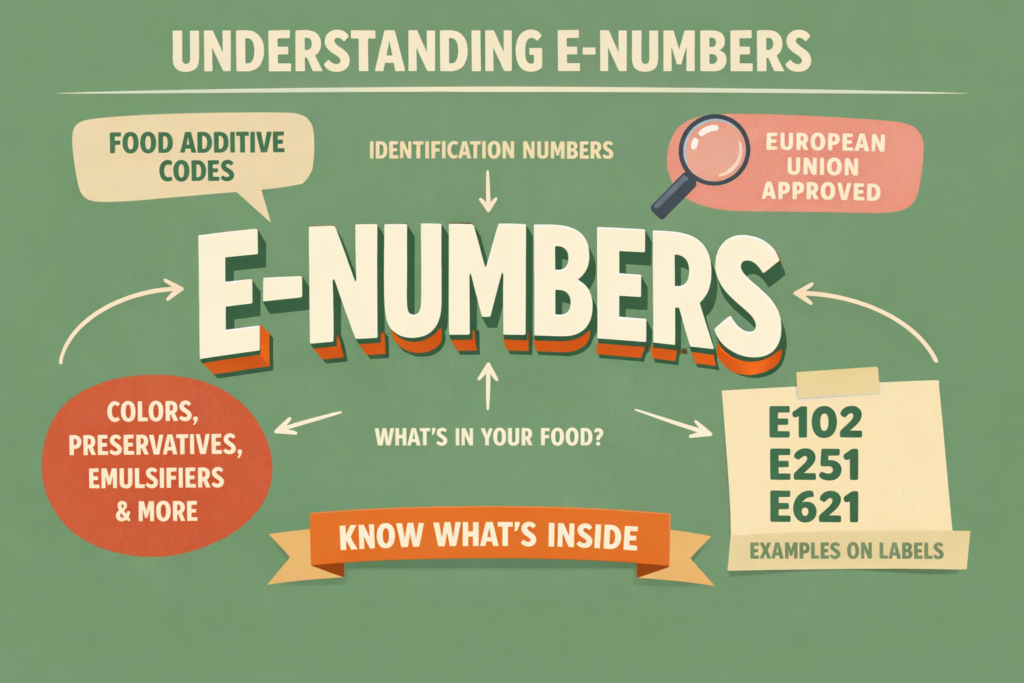
E-numbers indicate regulatory approval, not necessarily risk.
Awareness helps consumers navigate modern food environments.
Transparency empowers healthier, more intentional choices.
DECODE – DECIDE – LIVE
Additive Functions include
– Preserving freshness
– Enhancing flavour
– Improving texture
– Stabilising or thickening
– Adding colour
– Preventing spoilage
Types of Additives
A breakdown of the major additive categories, including their purpose and common examples.
Preservatives
Help prevent spoilage caused by bacteria, mould and yeast.
Commonly used in baked goods, coating fruits and vegetables, cured meats and soft drinks.
Look for key words including sorbates, benzoates and nitrates.
Colour Additives
Restore or enhance the colour of foods, commonly used in sweets, drinks and yoghurt production.
Carotenoids, beetroot red and artificial dyes are worth looking for.
Anti Caking Agents
Prevent Clumping in powdered foods. For example salt, spices and powdered mixes.
Key words to look for include Silicon Dioxide & Calcium Carbonate.
Flavourings.
Enhance or provides taste and aroma.
These are typically listed as Natural flavourings, artificial flavours & smoke flavouring.
They are used in most products including soft drinks, snacks, dressings, ready & convenience meals.
Acidity Regulators
Control pH levels to maintain stability & taste.
Very commonly seen as Citric or Lactic Acid.
Broad use across mutiple foods and drinks.
Antioxidants
Prevents fats and oils from becoming rancid & loss of nutritional value.
Commonly used in oils, margarines, cereals and snacks.
Look for key words including Ascorbic acid, tocopherols and butylated hydrox.
Emulsifiers, Stabilisers & Thickeners
Used to improve texture and prevent the separation of ingredients.
Common words to look for include Lecithin, Xanthan gum and Carrageenan.
When looking at for example ice cream, sauces, tinned pulses and plant milks.
Enzymes
Biological catalysts used to improve processing.
For example Amylase & Protease and used in bread, cheese and brewing.
Sweeteners
Add sweetness with or without calories.
Stevia, Sucralose & Aspartame are commonly used in diet drinks and sugar free products.
In the UK and EU, additives are assigned
E-numbers once approved.
These numbers help standardise identification.
Why E-numbers exist
* Ensure consistency across countries
* Indicate regulatory approval
* Help consumers identify additives quickly
Examples
* E300 – Ascorbic acid (Vitamin C)
* E415 – Xanthan gum
* E202 – Potassium sorbate
Not all E-numbers are artificial – many are naturally derived.
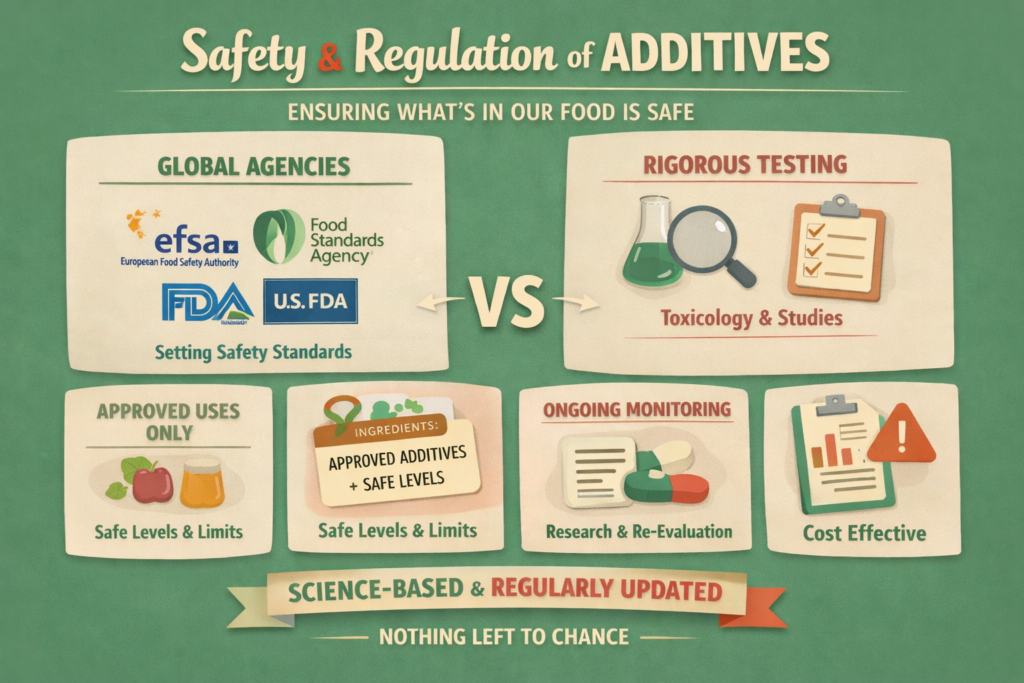
Food additives undergo rigorous safety assessments before approval.
Regulatory bodies include:
– UK: Food Standards Agency (FSA)
– EU: European Food Safety Authority (EFSA)
– Global: Codex Alimentarius
Safety assessments consider:
– Toxicology
– Acceptable daily intake (ADI)
– Long-term exposure
Additives can be re-evaluated as new research emerges.
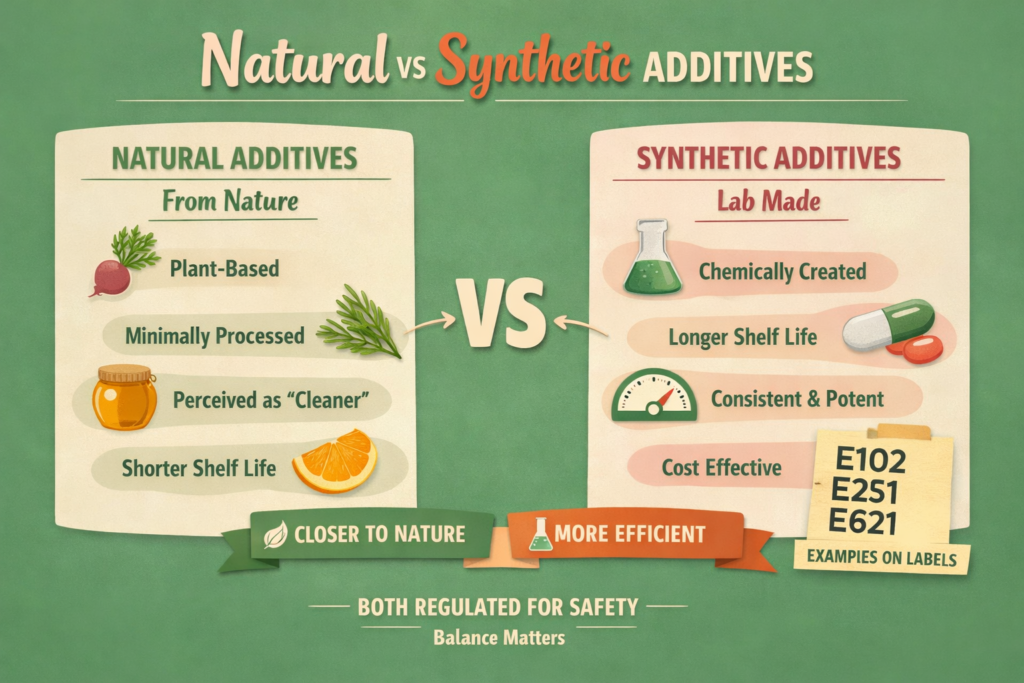
Both natural and synthetic additives can be safe or problematic depending on
* Dose
* Frequency of consumption
* Individual sensitivities
Natural examples:
* Beetroot red
* Pectin
* Rosemary extract
Synthetic examples:
* Artificial sweeteners
* Certain colourants
* Preservatives like sodium benzoate
Additives of Concern
Commonly questioned additives include:
– Artificial colours (e.g. tartrazine)
– Certain preservatives (e.g. sulphites)
– Flavour enhancers (e.g. MSG)
Some additives are controversial due to potential links to behavioural, digestive or allergic responses Regulations may require warning labels for specific additives.
Where additives commonly appear
Additives are most prevalent in:
– Ultra-processed foods
– Ready meals
– Soft drinks
– Confectionery
– Packaged snacks
– Processed meats
Whole and minimally processed foods typically contain fewer additives.
How to read Labels
Tips for consumers:
– Look for short ingredient lists
– Identify E-numbers and research their purpose
– Be cautious of vague terms like “flavourings”
– Watch for repeated additives across multiple daily foods
Empowering Customers
Understanding additives helps people:
– Make informed choices
– Reduce unnecessary exposure
– Choose products aligned with their values
– Support brands with transparent labelling
This is where awareness becomes action.
As you explore the rest of the site, you will find tools, guides and insights designed to
help you navigate modern living with clarity and confidence.
Together, we’re shaping a new standard
– one where transparency is expected – knowledge is shared – consumers lead the change –
Keep Going
Every step you take strengthens the movement to Live Beyond the Label.
Trusted sources – further reading
We base all additive information on publicly available, science‑led regulatory data from the most credible authorities worldwide. These organisations set safety standards, review emerging evidence and update their assessments as new research becomes available.
United Kingdom – Food Standards Agency (FSA)
Food Additives Authorisation Guidance How additives are assessed and authorised in Great Britain.
Approved Additives & E‑Numbers List Searchable database of permitted additives and conditions of use.
European Union — European Food Safety Authority (EFSA)
Food Additive Safety Assessment Process Toxicology, exposure modelling and risk assessment.
Scientific Opinions & Re‑Evaluations Updated ADIs and safety conclusions based on new evidence.
Guidance for Additive Evaluation Submissions Technical criteria for safety dossiers and testing requirements.