What the Food Industry Doesn’t Put on the Front of the Pack. We investigate what is behind the food label and discuss how to read one in 10 seconds.
Imagine walking into any supermarket and you’ll be surrounded by products telling you how healthy they are, the food label will be marketed …
“High Protein.”
“Low Fat.”
“Source of Fibre.”
“Natural.”
“Made with Whole Grains.”
“Plant-Based.”
The reality is that the front of the package is advertising, not education.
Food manufacturers spend millions designing packaging that captures your attention and encourages you to buy. They know most people make decisions in a matter of seconds, often without ever turning the product over to read the food label.
That’s why one of the most powerful habits you can develop is learning to read beyond the label.
Because when you do, you quickly discover that many products marketed as healthy are little more than highly processed foods wrapped in clever branding.
A Food Label – The Front of the Pack Tells a Story.
The Back Tells the Truth.
Most consumers have been conditioned to look at calorie counts, fat content or protein claims.
While those things have their place, they don’t necessarily tell you much about the quality of the food you’re eating.
A protein bar may contain 20 grams of protein while also containing a long list of additives, sweeteners, stabilisers, flavourings and emulsifiers.
A breakfast cereal may boast that it’s “whole grain” while being loaded with sugar.
A yoghurt may be labelled “low fat” but packed with ingredients designed to replace flavour and texture lost through processing.
In each case, the front of the pack highlights what the manufacturer wants you to notice.
The ingredients list reveals what they would rather you didn’t focus on.
Start with the Ingredients List
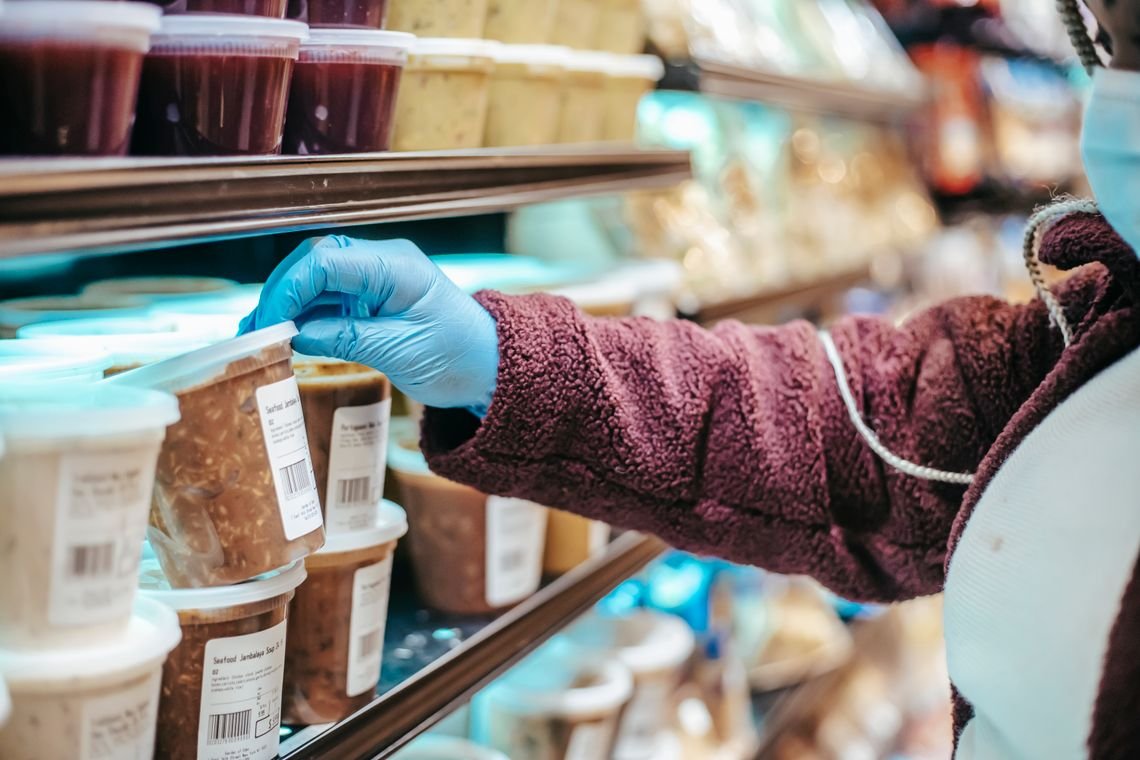
If there’s one place to look, it’s the ingredients list.
Ingredients must be listed in descending order by weight, meaning the ingredients used in the greatest quantities appear first.
This gives you a snapshot of what you’re actually eating.
For example, if the first few ingredients are
* Oats
* Nuts
* Dates
* Seeds
you already have a pretty good idea of what the product contains.
If instead you see
* Glucose Syrup
* Modified Starch
* Vegetable Oils
* Emulsifiers
* Sweeteners
* Flavourings
* Colourings
you’re looking at something very different.
The length of an ingredients list doesn’t automatically determine whether a food is healthy or unhealthy, but it can provide useful clues about how heavily processed a product may be
The further a product moves away from recognisable food ingredients, the more questions you should ask.
Is It Food or a Food Product?
This might sound like a strange question, but it’s worth considering.
At some point, many modern foods STOP resembling food and become industrial formulations.
They are designed to be
* Highly palatable
* Convenient
* Long – lasting
* Consistant in taste and texture
To achieve this, manufacturers often rely on a range of additives and processing techniques that most people would never use in their own kitchens.
If you wouldn’t find an ingredient in a typical home pantry, it’s worth understanding why it’s there.
The issue is the cumulative shift away from real, recognisable food and towards products that are engineered rather than prepared.
Understanding Ultra-Processed Foods
In recent years, the term ultra-processed food (UPF) has become increasingly common.
Ultra-processed foods are generally products that have undergone extensive industrial processing and often contain ingredients that are rarely used in home cooking.
These may include –
* Emulsifiers
* Artificial colours
* Artificial flavourings
* Sweeteners
* Stabilisers
* Preservatives
* Modified starches
* Isolated protein extracts
Again, the goal isn’t to create fear around food.
The goal is awareness.
Many people consume ultra-processed foods multiple times a day without realising it because they have been marketed as healthy, convenient alternatives.
Learning to identify these products helps you make more informed choices.
Don’t Be Intimidated by Long Ingredient Names
One of the most common pieces of nutrition advice is, “If you can’t pronounce it, don’t eat it.”
While well intentioned, it’s not always accurate.
Some perfectly safe ingredients have scientific names that sound intimidating, while some familiar ingredients can still be heavily processed.
A better approach is to ask –
* What is it?
* Why has it been added?
* What purpose does it serve?
A product that relies on multiple emulsifiers, stabilisers, colourings and flavour enhancers may indicate a level of processing that deserves a closer look.
The more labels you read, the more familiar these ingredients become and the easier it becomes to identify products that are closer to real food.
Pay Attention to the Oils
One area many consumers overlook entirely is the type of oils used in packaged foods.
Food manufacturers often choose oils based on cost, shelf life and manufacturing practicality rather than nutritional quality.
That’s why it’s worth checking the ingredients list to see what fats are actually being used.
Ask yourself –
* What type of oil is included?
* Is it one of the main ingredients?
* Is the product using multiple refined oils?
* Is the oil there for nutrition or simply to improve texture and shelf life?
Many people spend time counting calories while never considering the quality of the ingredients providing those calories.
The source matters.
Looking at the ingredients list can often tell you far more than the numbers in the nutrition panel alone.
Don’t Just Look for Sugar – Look for the Story Behind the Sweetness.
Many consumers scan a label looking for one thing -sugar.
Over the years, we’ve been encouraged to view sugar as something to avoid, leading to a surge in products labelled low sugar, reduced sugar and sugar free.
But focusing solely on sugar can mean missing the bigger picture.
Food manufacturers have become increasingly skilled at creating sweet products without relying entirely on sugar. Through the use of sweeteners, flavourings and food technology, products can still deliver the sweetness consumers expect while carrying claims that make them appear healthier.
The question isn’t simply “Does this product contain sugar?”
The question is “How has this product been made to taste sweet?”
Understanding Sweeteners
Sweeteners are ingredients used to replace or reduce the amount of sugar in a product while maintaining sweetness.
Some are derived from naturally occurring compounds, while others are manufactured through industrial processes.
Their purpose is often straightforward: provide sweetness using smaller quantities, lower production costs, extend shelf life, reduce calories, or allow products to be marketed as sugar free or reduced sugar.
This doesn’t automatically make them good or bad.
What matters is whether consumers understand they are there and whether their presence aligns with their own food choices.
For some people, a sweetener may be an acceptable ingredient.
For others, the use of highly processed sweeteners may conflict with their preference for foods that are closer to their original form.
The key is being informed enough to make that decision for yourself.
Read Beyond the Claim
A sugar-free label tells you what has been removed.
The ingredients list tells you what has been added.
When reading a label, look for ingredients that are being used to create sweetness, enhance flavour or modify texture.
Ask yourself
* Why has this ingredient been added?
* What purpose does it serve?
* How was it produced?
* Does it align with the way I want to eat?
Sometimes you’ll find a product made from a handful of recognisable ingredients.
Other times you’ll discover a long list of sweeteners, flavourings, stabilisers and additives working together to recreate a taste experience.
Neither label can make that judgment for you.
But understanding the ingredients gives you the information needed to make an informed choice.
The Live Beyond The Label Approach
At Live Beyond The Label, the goal isn’t to tell you that sugar is good, bad, healthy or unhealthy.
The goal is to encourage curiosity.
To look beyond the marketing claims.
To understand how ingredients are made, processed and combined.
And to ask a simple question:
Does this product align with my own food values and the choices I want to make?
Because food is more than a number on a nutrition panel. It’s the sum of every ingredient, every processing step and every decision made before it reached your shopping basket.
Common Food Labels That Can Be Misleading
One of the biggest myths in modern food marketing is that a single claim on the front of a packet tells you everything you need to know about the product inside.
It doesn’t.
Most claims highlight one positive feature while distracting you from the bigger picture – how the product was made, how heavily processed it is and what ingredients were required to create it.
The purpose of reading beyond the label isn’t to decide whether a product is “good” or “bad”.
It’s to understand whether the ingredients and manufacturing processes align with your own food choices and values.
“High Protein”
Protein has become one of the food industry’s most powerful marketing tools.
But protein doesn’t tell you how processed a product is.
Many protein products rely on isolated protein powders, protein concentrates, flavourings, sweeteners, emulsifiers and stabilisers to achieve the taste and texture consumers expect.
The question isn’t simply “How much protein does it contain?”
It’s “How was that protein created, processed and incorporated into the final product?”
A product can be high in protein whilst still being ultra-processed.
“Plant-Based”
Many consumers automatically associate plant-based with healthy, natural and minimally processed.
But being derived from plants tells you nothing about the level of processing involved.
Some plant-based products are built from recognisable ingredients such as beans, lentils, vegetables, nuts and seeds.
Others are manufactured from highly processed ingredients that have been fractionated, isolated, refined and reconstructed into something that bears little resemblance to the original plant.
The question shouldn’t be whether something is plant-based.
The question should be “How was this ingredient made?”
Understanding the journey from crop to ingredient often reveals far more than the claim itself.
“Low Fat” or “Fat Free”
When something is removed from a product, something usually has to replace it.
Fat contributes flavour, texture and mouthfeel.
Removing it often requires additional ingredients to recreate the eating experience consumers expect.
Rather than focusing on what was removed, ask “What was added back in?”
The answer is often found in the ingredients list.
“No Added Sugar” or “Sugar Free”
Many consumers see these labels and assume they represent a healthier option.
But sweetness has to come from somewhere.
Reducing or removing sugar often leads manufacturers to use alternative sweeteners, flavourings and processing techniques to maintain taste and palatability.
Instead of focusing solely on the absence of sugar, ask “What ingredients are being used to create the sweetness?”
The goal is not to fear sugar or sweeteners.
It’s to understand the complete product rather than judging it based on a single claim.
“Natural”
Few words are used more frequently or less clearly.
Natural can create images of fields, farms and simple ingredients.
Yet a product can carry a natural-sounding image while still containing a long list of refined and heavily processed ingredients.
Rather than trusting the word, investigate the ingredients.
The ingredients list will always tell you more than the marketing claim.
“Made with Whole Grains”
Notice the wording carefully.
Made with whole grains is not the same as being made mostly from whole grains.
A small amount of a desirable ingredient can be used to create a strong marketing message.
This is why the ingredients list matters more than the headline claim.
“Healthy”
Possibly the most misleading label of all.
Healthy means different things to different people.
For some people it means high protein.
For others it means low sugar.
For others it means organic, additive-free, minimally processed, locally sourced or free from ultra-processed ingredients.
The label doesn’t get to decide what healthy means.
You do.
That’s why reading beyond the label matters.
The Question That Changes Everything

Instead of asking “Is this healthy?”
Ask “How was this made?”
Where did the ingredients come from?
How many manufacturing stages were involved?
Has the original food been refined, fractionated, extracted, isolated, concentrated or reconstructed?
Would I recognise these ingredients in their original state?
These questions move the conversation away from marketing claims and back to understanding the food itself.
Because ultimately, Live Beyond The Label isn’t about telling people what to eat.
It’s about giving them the information and confidence to make their own informed choices.
Learn to Compare Products
Once you start reading ingredients lists, comparisons become incredibly revealing.
Take two products sitting side by side on a shelf.
One contains –
Five ingredients
No additives
Recognisable whole-food ingredients
The other contains –
Twenty-five ingredients
Multiple emulsifiers
Preservatives
Added colourings
Artificial flavourings
Both may be marketed as healthy.
Both may have similar calorie counts.
Yet one is clearly much closer to real food than the other.
The ability to spot these differences becomes easier every time you shop.
The 10-Second Food Label Checklist
Don’t have time to analyse every product in detail?
Use this simple checklist:
✅ Ignore the front of the pack
✅ Read the first 3–5 ingredients
✅ Check whether you recognise most of them
✅ Look for UPF markers such as emulsifiers, stabilisers, flavour enhancers and artificial sweeteners
✅ Check what oils are being used
✅ Look for hidden sources of sugar
✅ Ask yourself “Does this still look like food, or has it become a food product?”
If the ingredients resemble things you would find in a kitchen rather than a factory, you’re generally moving in the right direction.
Progress Over Perfection

It’s important to keep this conversation balanced.
The goal is not to eliminate every packaged food from your diet.
The goal is not to create anxiety around food shopping.
People have jobs, families, budgets, travel commitments and busy lives.
Convenience matters.
What matters even more is awareness.
Every time you choose a product with simpler ingredients, fewer additives and less industrial processing, you’re taking a step towards a diet built around real food.
Those small decisions compound over time.
The Bottom Line
Food companies are incredibly good at selling an image.
They know that words like high protein, natural, plant-based, low fat and healthy grab our attention. But these claims often tell only a small part of the story.
Real food doesn’t need a marketing department.
The next time you pick up a product, take 10 seconds to look beyond the front of the pack. Read the ingredients. Check the oils. Look for additives. Question the claims.
Because the healthiest choice isn’t always the product shouting the loudest from the shelf, it’s often the one with the shortest ingredient list and the least amount of explaining to do.
Research & Transparency – Live Beyond the Label is committed to clarity, honesty, and evidence‑led information. All content is based on publicly available research from reputable organisations such as the WHO, NHS, FAO, BMJ, EFSA, and Harvard.
This content is for general awareness only and is not medical advice.
Further Reading:
• NHS – How to Read Food Labels
• Food Standards Agency – Labelling Guidance