Why Polyester Deserves a Closer Look
Polyester is everywhere. In leggings, sports bras, base layers, running tops, gym shorts, jackets, socks, underwear, even bedding and everyday clothing.
It is the single most dominant fibre in modern sportswear and for many people, it is the fabric touching their skin more than anything else they own.
already introduces this reality.
“Polyester is a petroleum derived plastic known as polyethylene terephthalate.”
This spoke expands that foundation into a full, evidence aligned deep dive.
We explore
– What polyester is
– How it is made
– Why it dominates activewear
– What research says about textile chemicals
– How polyester behaves on the skin
– It is environmental footprint
– What lower impact alternatives are emerging
This is not fear based content – It is transparency based content
The heart of Live Beyond The Label
What Polyester Actually Is
The Chemistry Made Simple

Polyester is not a fabric in the traditional sense.
It is a plastic, specifically polyethylene terephthalate (PET).
Created through chemical reactions that transform crude oil into long molecular chains.
Polyester = PET = Plastic
PET is the same family of material used in
– Drinks bottles – Food Packaging – Synthetic Carpets –
– Technical Textiles – Performance Clothing –
Polyester fibres are essentially thin, flexible plastic filaments engineered to behave like fabric.
The Building Blocks
Polyester is formed from two key petrochemical components
Ethylene glycol and Terephthalic acid derived from crude oil during refining.
When combined under heat and pressure, they form long polymer chains, the backbone of polyester.
Why This Matters
Understanding polyester as a plastic helps explain
– Why it sheds microplastics
– Why it requires chemical finishing
– Why it behaves differently on the skin compared to natural fibres
– Why it persists in the environment
– Why regulators are increasingly examining textile chemistry
“Most modern activewear is manufactured using synthetic fibres such as polyester, nylon and elastane.”
Polyester is the leader of that group.
How Polyester Is Made
From Oil Barrel to Leggings
“Polyester (PET) – Oil → Refining → Chemicals → Polymer pellets → Fibres → Clothing.”
Here is the full breakdown.
Step 1 – Crude Oil Extraction
Polyester begins as petroleum extracted from the earth.
This raw oil contains hydrocarbons that can be transformed into plastics and synthetic fibres.
Step 2 – Refining
Oil is heated and separated into different fractions.
Some of these fractions become the chemical building blocks for PET.
Step 3 – Chemical Synthesis
Ethylene glycol and terephthalic acid are combined in a reactor.
Heat and pressure trigger polymerisation, forming long chains of PET.
Step 4 – Pelletisation
The molten PET is cooled and chopped into small pellets, the raw material used by fibre manufacturers.
Step 5 – Fibre Extrusion
Pellets are melted again and pushed through tiny spinneret holes, forming continuous filaments.
Step 6 – Drawing & Stretching
Fibres are stretched to align the polymer chains, increasing strength and durability.
Step 7- Spinning & Knitting
Fibres are spun into yarn, then knitted or woven into fabric.
Step 8 -Dyeing & Finishing
This is where many chemical questions arise.
“The finished fabric is often dyed, treated and engineered to provide characteristics such as moisture wicking, durability, wrinkle resistance, colour retention, quick drying performance.”
These treatments often involve
– PFAS – Phthalates – Bisphenols – Synthetic Dyes – Anti Odour Agents –
– Softening Chemicals – Stain Resistant Coatings –
We explore these in detail later.
Why Polyester Dominates Modern Sportswear

Polyester didn’t become the world’s most used textile by accident.
It offers performance characteristics that brands rely on
Key Advantages
– Stretch (when blended with elastane)
– Durability
– Moisture management
– Quick drying
– Shape retention
– Lightweight comfort
– Colour stability
– Cost efficiency
– Ease of mass production
“These materials dominate the sportswear industry because they provide stretch, durability, moisture management, quick drying properties, shape retention, lightweight comfort.”
Polyester is predictable, scalable and cheap – making it ideal for fast moving sportswear markets.
Textile Chemicals in Polyester
What Research Shows
Our previous insight introduces the rise of chemical concerns
“Studies examining textiles and clothing have identified the presence of PFAS, bisphenols, phthalates, certain dyes and finishing agents in some clothing and textile products.”
This section expands that into a full evidence aligned overview.
PFAS (Per and Polyfluoroalkyl Substances) are used to create
– Water Resistance – Stain Resistance – Oil Repellence –
They are known as “forever chemicals” because they persist in the environment and do not easily break down.
Some PFAS compounds have been studied for potential links to
– Endocrine disruption
– Immune system effects
– Environmental contamination
“PFAS exposure has been studied in relation to endocrine function and broader health outcomes.”
Phthalates are used as plasticisers and can appear in
– Prints
– Coatings
– Elastane blends
– Some synthetic dyes
Certain phthalates have been classified as endocrine disruptors.
Bisphenols (Including BPA) can appear in
– Polyester manufacturing residues
– Printing inks
– Certain coatings
BPA is one of the most widely studied endocrine disrupting chemicals.
Synthetic Dyes & Finishing Agents may contain
– Azo dye residues
– Disperse dyes
– Dye carriers
– Fixatives
Some dyes have been classified as skin sensitisers.
Important Clarification
“The presence of a chemical does not automatically mean there is a health risk.
Exposure depends on concentration, duration and route of exposure.”
This is essential.
Advocating Transparency – Not Alarmism.
Polyester on the Skin
Sweat, Heat & Friction

“When exercising, additional factors come into play increased body temperature, increased blood flow to the skin, sweating, friction from movement, prolonged contact between fabric and skin.”
These conditions can influence how substances interact with the skin.
Key Factors
Heat increases skin permeability
Sweat can act as a solvent
Friction can increase irritation
Duration increases exposure time
Tight fit increases contact pressure
Researchers studying dermal absorption note that:
Hydrated skin absorbs differently
Warm skin absorbs differently
Friction can disrupt the skin barrier
Chemicals behave differently under exercise conditions
“Researchers studying dermal exposure recognise that factors such as skin hydration, temperature, blood flow and duration of contact may influence absorption through the skin.”
This does not mean polyester is unsafe. It means context matters.
Microplastics
Polyester’s Environmental and Human Exposure Pathways
“Synthetic clothing sheds microfibres during wear and washing…
humans may encounter microplastics through inhalation, ingestion, skin contact.”
Polyester is one of the largest sources of microplastic pollution globally.
Microfibre Shedding Occurs During
– Washing – Drying – Wearing – Stretching – Friction – Movement – Environmental Impact –
Microfibres enter
– Rivers – Oceans – Soil – Air – Food Chains – Human Exposure –
Research suggests potential exposure through
– Inhalation of airborne fibres
– Ingestion via food or water
– Skin contact during exercise
– Long term health implications are still being studied.
“Again, this area is still developing.”
Polyester Finishing Treatments
Where Many Questions Arise

“It is often during these finishing stages that questions arise around the use of certain chemicals and textile treatments.”
Finishing treatments include
– Water resistant coatings – Stain repellent finishes – Anti odour technologies –
– Colour fastness treatments – Softening processes
Many of these rely on chemical additives that are now under regulatory review.
Anti Odour Technologies may involve
– Silver nanoparticles – Triclosan (restricted in many regions) – Antimicrobial chemicals –
Water Resistant Coatings often involve
– PFAS compounds –
Colour Fastness Treatments may involve
– Synthetic dye fixatives –
Softening Agents may include
– Siilicone based chemicals.
Polyester & Regulation
What Authorities Are Examining
Across the EU, UK, US and other regions, regulators are examining
– PFAS in textiles
– Endocrine disrupting chemicals
– Microplastic pollution
– Chemical disclosure requirements
– Textile waste management
– Recycled PET safety considerations
This is a rapidly evolving area.
“Experts continue to investigate the extent to which chemicals may migrate from fabrics and the significance of any resulting exposure.”
Lower Impact Polyester Innovations
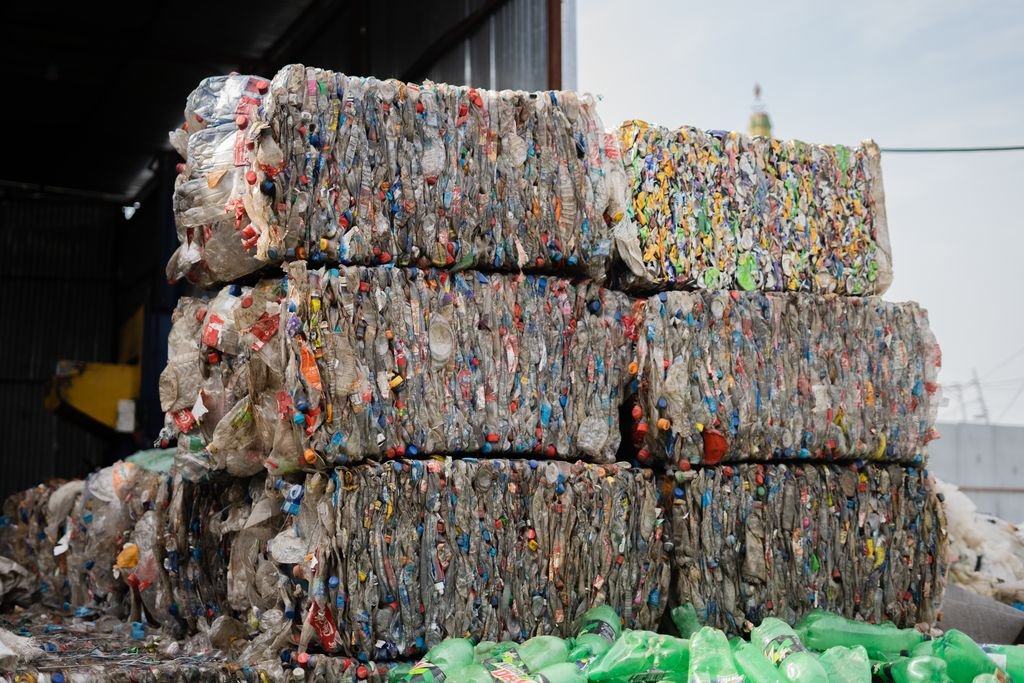
Not all polyester is equal.
Brands and researchers are exploring
Recycled Polyester (rPET) – Made from recycled bottles or textile waste. Reduces reliance on virgin petroleum.
Bio Based Polyester – Uses plant derived feedstocks instead of crude oil.
PFAS Free Finishes – Growing rapidly due to regulatory pressure
Closed Loop Dyeing Systems – Reduce chemical discharge
Mechanical Stretch Alternatives – Reduce reliance on elastane blends.
However …
Polyester Is Still Polyester
Why Virgin and Recycled Forms Carry the Same Concerns
Polyester is often marketed in two forms
– virgin polyester (made directly from crude oil)
– recycled polyester (made from plastic bottles or textile waste).
However despite different origins, both materials share the same fundamental reality
– They are plastic – They behave like plastic – They shed plastic –
“Synthetic clothing sheds microfibres during wear and washing.”
This applies equally to all polyester virgin, recycled, blended, brushed, knitted, woven.
Recycled polyester does not change the fibre’s behaviour
Whether polyester begins as
– a petrochemical feedstock
– a drinks bottle
– industrial waste
– textile scraps
…the resulting fibre is still polyethylene terephthalate (PET).
The polymer structure is identical.
The shedding behaviour is identical.
The environmental persistence is identical.
Microplastic shedding remains the central problem.
Polyester microfibres enter
– oceans – rivers – soil –
– household dust – indoor air –
And humans encounter them through
– inhalation – ingestion – skin contact –
“Humans may encounter microplastics through inhalation, ingestion, skin contact.”
Recycling does not stop this.
It simply moves plastic from one product stream to another.
Recycled polyester is not a solution, it is a diversion. It reduces reliance on virgin petroleum, which is positive.
But it does not
– prevent microplastic pollution – reduce environmental persistence –
– eliminate chemical finishing treatments – biodegrade –
– reduce human exposure pathways –
– solve the upstream plastic production problem –
The real issue is not that polyester is not recycled enough.
The real issue is that we are producing enormous volumes of plastic in the first place.
This is why transparency matters, not marketing narratives.
Explore more in synthetic fibres – Coming Soon
Making More Informed Choices
Reducing Polyester Reliance Without Extremes

We advocate across Live Beyond the Label that
“Awareness doesn’t require perfection and progress doesn’t require extremes.”
This remains true but “progress” must be grounded in evidence, not industry messaging.
If your goal is to reduce exposure to synthetic materials, polyester (virgin or recycled) is not the answer.
Polyester is still
– petroleum‑derived – chemically finished – non‑biodegradable –
– shedding microplastics – persistent in ecosystems –
– present in indoor and outdoor air – part of a global waste challenge –
More informed choices look like this
– Choose natural fibres with a verified audit trail –
Natural fibres are not automatically superior but when they are responsibly sourced, minimally processed,
free from PFAS and harsh finishing agents, traceable through supply chains
…they behave fundamentally differently on both skin and environment.
And why at Live Beyond the Label transparency is a must
“Consumers deserve the opportunity to understand what sits behind marketing claims and product labels.”
We can become more aware and prioritise fibres that do not shed plastic by
– Looking for clothing that uses
– TENCEL™ Lyocell – Merino wool – Organic cotton –
– Certified cellulose fibres – Verified bio‑based innovations –
These fibres shed biodegradable microfibres, not plastic.
– Replace synthetic items gradually
This is not about throwing away your wardrobe,
it is about replacing items as they naturally wear out with lower‑impact alternatives.
– Avoid unnecessary chemical coatings
Water‑resistant, stain‑repellent, anti‑odour and “easy‑care” finishes often involve
– PFAS – antimicrobial chemicals – synthetic dye fixatives – plasticised coatings –
– Choosing untreated or minimally treated fabrics reduces unnecessary chemical exposure
Learn more in alternative fabrics – Coming Soon
Polyester Is Not a Personal Choice Problem
It Is A Production Problem
Polyester is not “bad” because people wear it.
Polyester is “bad” because the system produces too much plastic.
“Better choices do not require overnight perfection.”
The issue is not individual behaviour, it is industrial scale.
Recycled polyester does not solve the plastic crisis, it delays the waste, disguises the impact, redistributes plastic into new forms,
continues microplastic shedding, continues environmental persistence.
It is not a circular solution – It is a temporary detour
The real solution is upstream
– Reduce plastic bottle production – Reduce reliance on petroleum‑derived fibres –
– Increase investment in biodegradable, bio‑based and circular materials –
– Improve textile chemical regulation – Support brands that prioritise natural and low‑impact fibres –
– Encourage transparency across the supply chain –
“Because understanding what sits behind the label is the first step towards making more informed choices.”
Polyester is not inherently harmful in isolation, but it is inherently
– synthetic – plastic – persistent – shedding –
– chemically treated – environmentally impactful –
And recycled polyester does not change that.
This is not fear‑based messaging, it is fact based transparency.
The very foundation of Live Beyond The Label.