
Why families can not teach what they have never been taught
Food literacy is often spoken about as something that should be taught at home
– passed down through generations –
– shared in kitchens – gardens – everyday life –
In an ideal world, it would be but we are no longer living in the world our grandparents grew up in.
The chain of knowledge has been broken.
Today’s parents are raising children in a food system that looks nothing like the one they were raised in.
Many never learned to cook from scratch, never grew food, never preserved seasonal produce
and never saw real ingredients used daily.
Not because they didn’t care but because the skills simply were not there to inherit.
This is the heart of the food literacy crisis – families cannot teach what they have never learnt.
The First Break in the Chain – When Convenience Replaced Knowledge
The shift began quietly in the 1970s and 1980s.
As convenience foods entered the mainstream, they were marketed as modern, efficient, and liberating.
Packet mixes, tinned meals, frozen ready meals and instant sauces became household staples.
For many families, these products were a lifeline.
They saved time, reduced labour, and fit the pace of changing lifestyles.
However they also replaced something essential – the daily practice of cooking from raw ingredients.
When convenience entered the kitchen, food skills began to fade.
Children still saw some cooking, but less than their parents did.
Growing food became optional. Preserving became rare.
The chain weakened but it hadn’t yet snapped.
Coming soon – food literacy
The Second Break – The UPF Generation
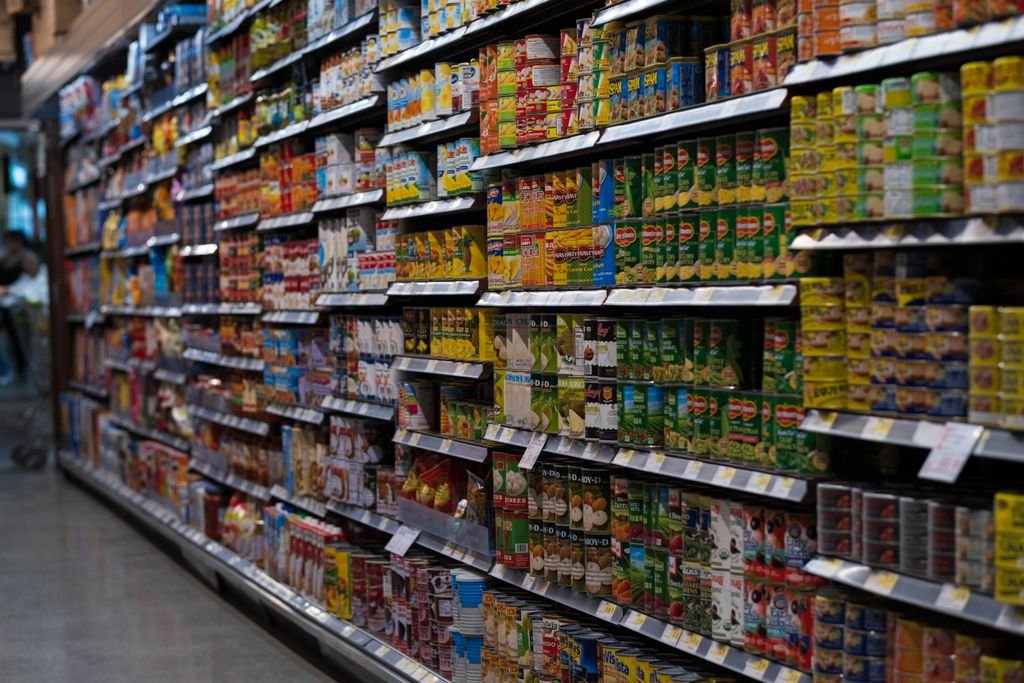
By the 1990s and 2000s, ultra‑processed foods (UPFs) had taken over.
These products weren’t just convenient, they were engineered to be cheap, fast, and irresistible.
They filled supermarket shelves, lunchboxes and family routines.
This generation grew up with
– fewer home‑cooked meals
– less exposure to raw ingredients
– little understanding of food origins
– almost no experience of growing or preserving food
Cooking became something done occasionally, not daily.
Growing food became a hobby, not a norm.
Preserving became almost unheard of.
The chain of knowledge snapped.
Coming soon – UPFs
The Third Break – When Real Food Became Expensive
The final break in the chain came when real ingredients became more expensive than convenience foods.
When a ready meal costs £2.50 and the ingredients to cook a fresh version cost £6–£10, families choose what they can afford.
When a jar of sauce is £1 but the tomatoes, herbs and aromatics cost triple that, convenience wins.
This is not a failure of parenting – It is a failure of the food system.
Families cannot teach cooking skills when they cannot afford ingredients.
They cannot teach growing skills when they have no access to land.
They cannot teach preserving skills when they have no seasonal abundance to preserve.
Coming soon – real food affordability
The Result – A Generation Raised Without Real Food Skills

Today’s parents are raising children without the skills their grandparents considered basic.
Many adults
– don’t know how to cook beyond heating instructions
– don’t know how to grow even simple vegetables
– don’t know how to preserve food safely
– don’t know how to read food labels beyond branding
– don’t know how to budget for real ingredients
don’t know how to stretch meals or reduce waste
This is not a criticism — it is a reality.
You cannot pass down skills you never learned.
You cannot model habits you never saw.
You cannot teach confidence you never built.
The generational break is real and it is deep.
Why This Matters for Children Today
Children learn food skills through exposure, repetition and participation.
But if parents never learned these skills, children never see them.
This creates a cycle
– Parents rely on convenience foods
– Children grow up seeing convenience as normal
– Real food feels unfamiliar, expensive, or intimidating
– Skills are not passed down
– The next generation becomes even more disconnected
This cycle will continue unless something interrupts it.
That “something” must be education.
Coming soon – Food Tech failure
Why Families Alone Cannot Fix This
We often hear
“Parents should teach children to cook”
“Parents should teach children about real food”
“Parents should teach children where food comes from”
But this assumes parents have the skills, confidence, time and resources to do so, however many don’t.
Families cannot rebuild food literacy alone because
– the skills were lost two generations ago
– real food is often more expensive
– convenience is necessary for time‑poor households
– marketing shapes children’s beliefs
– schools do not teach meaningful food education
– parents feel intimidated by real ingredients
Expecting families to fix a systemic problem is unrealistic and unfair.
Where Food Literacy Must Be Rebuilt
Food literacy must be rebuilt in places where every child has access
– schools
– community gardens
– local food programmes
– youth groups
– public health initiatives
This is why a structured curriculum from ages 4–16 is essential.
It fills the gap families cannot fill alone.
It rebuilds skills that were lost.
It reconnects children to real food, regardless of background.
Coming soon – real food education
The Path Forward – Rebuilding What Was Lost
The loss of food skills was not inevitable – it was the result of cultural, economic and systemic shifts.
But the reconnection can be intentional.
We can rebuild food literacy by
– teaching children to grow food
– teaching them to cook real meals
– teaching them to preserve seasonal produce
– making real ingredients affordable
– reforming school food education
– challenging marketing narratives
– reconnecting families with real food culture
– This is how we break the cycle – This is how we rebuild the chain –
– This is how we help the next generation live beyond the label –