Part 1 –
A new investigative series from the Beyond the Headlines spoke of the Live Beyond the Label Education Hub
“Be Ready” But For Whose Failure?
The Government says ‘Be Ready’.
Keep bottled water at home.
Keep food that does not require refrigeration or cooking.
Keep cash in a mixture of notes and coins.
Prepare for the possibility that the power, water, internet or payment systems you rely upon could stop working.
On the surface, this is practical advice.
Few people would argue against keeping some basic provisions at home in case of a temporary emergency.
But at Live Beyond the Label, we do not stop at the surface.
We look at what the headline tells us, what it leaves un said and what it reveals about the systems shaping our lives.
The official Be Ready guidance introduced on the 22nd of October 2026 as part of a three year campaign
asks households to prepare to manage for three days while support reaches those most in need.
Its checklist includes three litres of bottled drinking water per person per day, additional water for cooking and washing, non perishable food, cash and cards, a torch, a radio, a power bank, essential medication, first-aid supplies and other household necessities.
Preparing for a short disruption is sensible.
But preparation should not silence scrutiny.
If households are being asked to prepare for the loss of essential services, we must also be allowed to ask
– why those services may fail
– whether the underlying risks have been properly addressed
– who is responsible for making the systems themselves resilient.
The question is not simply Are households ready?
The more important question is
Why are households increasingly expected to carry the consequences when systems over which they have little control stop working?
That is the contradiction at the heart of The Resilience Paradox.
Preparedness is Not The Problem
Let us be clear from the beginning.
This is not an argument against keeping emergency supplies.
A power cut can happen. A water main can burst. A cyber attack can disrupt services. Severe weather can affect transport, communications and supply chains.
Having water, suitable food, medication, a torch and some physical cash available could help a household manage through a short disruption.
The problem begins when preparedness is presented primarily as a household responsibility without an equally visible conversation about the responsibilities of the institutions running the systems upon which those households depend.
The public is being asked to prepare for three days without reliable access to services, but that request cannot be separated from the wider direction in which our society has travelled.
– Our payments have become increasingly digital.
– Our food depends upon complex and concentrated supply chains.
– Our water relies upon extensive infrastructure that consumers neither own nor control.
– Our communication, banking, retail and public services increasingly depend upon interconnected technology.
Convenience has increased, but so has dependency.
The more essential activities that are placed behind the same technological, commercial or infrastructural systems, the greater the consequences when one of those systems fails.
The Government itself recognises the importance of cyber and operational resilience within financial services.
A 2026 HM Treasury report on cyber resilience states that
‘digital technologies have become increasingly central to financial service delivery and that effective investment in resilience helps organisations recover from disruption, maintain trust and sustain performance’
If resilience is important enough to shape institutional policy, regulation and corporate investment, it must not be reduced to a shopping list when the message reaches the public.
Consumers can prepare for disruption.
They cannot be expected to compensate for structural weakness.
The Cashless Contradiction

Why does emergency guidance tell us to keep the very thing everyday life is making harder to use?
Cash appears on the official emergency checklist for a simple reason – digital access cannot always be guaranteed.
The advice asks households to keep cash in a mixture of notes and coins, as well as cards.
That should make us pause.
For years, consumers have been encouraged towards digital payments on the grounds of speed, convenience and efficiency.
Shops, car parks, transport systems and other services have increasingly adopted card-only, contactless or app based payment arrangements.
But a digital balance is not the same as immediate access to money.
A person may have funds in a bank account, yet still be unable to use them if the necessary payment terminal, banking system, retailer network, internet connection or electricity supply is unavailable.
The money remains theirs.
Their practical ability to exchange it does not.
That does not make digital banking inherently wrong.
It demonstrates why resilience depends upon maintaining alternatives.
The Government’s own Cash Access Policy Statement says that the share of UK payments not involving cash rose from around 45% a decade earlier to 85% in 2021.
It also recognises that digital payment options are not suitable for everyone, that businesses require deposit facilities if they are to continue accepting cash and that an un managed decline in access to cash could be detrimental to users.
This is important because the future of cash is not simply a matter of personal preference.
It is a question of –
• inclusion
• financial autonomy
• emergency resilience
• business choice
• access for people who cannot easily use digital services
• and whether society retains an alternative when its dominant payment system is interrupted.
Digital convenience depends upon functioning infrastructure
A card payment may feel almost effortless to the person tapping the terminal, but behind that small action sits an extensive network.
The transaction depends upon technology, communication and payment infrastructure operating together.
The wider payments sector is described by UK Finance as
‘increasingly diverse and complex, with cyber security, outsourcing, cloud technology and operational resilience among the issues affecting its development‘
It also identifies cash management and access to cash as continuing policy priorities.
This does not mean the entire payment network is about to fail.
It means that dependency has a structure and that structure carries risk.
Resilience should therefore mean more than protecting digital platforms.
It should also mean preserving a practical alternative for the consumer.
Cash is not merely a nostalgic preference or an inconvenience standing in the way of progress.
It is a payment method that can continue to fulfil a role when some of the infrastructure required for digital transactions is unavailable.
If emergency planning depends upon households keeping physical cash, society must protect the conditions that allow that cash to remain usable.
That means protecting not only access to banknotes and coins, but also
• businesses’ ability to deposit cash
• retailers’ willingness and ability to accept it
• reasonable withdrawal facilities
• and public understanding of its role within a balanced payment system.
There is little value in telling people to retain emergency cash if fewer places can accept it when an emergency occurs.
The value lost through payment fees
There is also a broader economic issue behind digital transactions.
When somebody pays £10 in cash, that physical £10 can pass from customer to local shop, from the shop to another supplier and onwards through the local economy while remaining £10 at the point of exchange.
Digital payments operate differently because accepting them can involve charges for the business. The exact arrangement varies according to the provider, contract, card type and transaction, so it would be inaccurate to state that every transaction incurs the same percentage fee.
However, the principle remains important.
When fees are taken at successive stages, part of the value passing between consumers and businesses is transferred to financial and payment intermediaries. The original money does not literally disappear from the economy, but less of each payment may remain with the receiving business.
For a large company, an individual transaction fee may appear small.
For a small independent business processing hundreds or thousands of transactions, those costs accumulate.
We should be able to discuss this without pretending that digital payments provide no benefits. They plainly do.
But convenience is not cost free and consumers rarely see who ultimately pays for the infrastructure supporting an apparently effortless tap.
The question is not whether all digital transactions should end.
It is whether one system should be allowed to become so dominant that the public loses a meaningful alternative.
A resilient payment system should offer choice before a crisis, not merely recommend cash after digital dependency has already been established.
Water in the Cupboard or Resilience in the Network?
The advice places the immediate burden inside the home

The Be Ready checklist recommends three litres of bottled water per person per day for drinking over three days, with additional water needed for cooking and washing.
For one person, that means at least nine litres of drinking water.
For a household of four, it means at least 36 litres before allowing for cooking, washing, pets or additional needs.
For some households, storing that volume may be manageable.
For others, particularly people living in small homes, flats or shared accommodation, the required physical space may be much harder to find.
Then there is the financial burden of purchasing it, keeping track of it, rotating it and replacing it when necessary.
There is also the packaging.
Plastic can be useful, including in an emergency. But telling millions of households to retain bottled water is not an insignificant environmental or practical proposition. Storage conditions and the intended period of storage also matter.
The central question is not whether people should have emergency water.
It is why public preparedness appears so focused on what happens after access fails, rather than placing equal emphasis on preventing or minimising the failure itself.
The infrastructure question cannot be ignored
Approximately one-fifth of water is lost through leaking pipes according to industry body Water UK.
It says leakage has fallen by around 40% since privatisation and by 9% across the 2020–2025 period, while companies repaired 45,383 burst pipes in England and Wales during 2024–25.
Those figures show that repairs and reductions are taking place.
They also show that a substantial amount of treated water continues to be lost before reaching the consumer.
Both facts matter.
An evidence led consumer voice should acknowledge improvement without pretending that the remaining problem is insignificant.
The Government’s 2026 water sector white paper sets out plans for major reform, stronger regulation, safer and more secure water supplies, environmental protection and a fairer deal for customers.
Its introduction describes the reforms as a response to what had gone wrong in the sector and says public trust must be rebuilt.
That language matters.
If the system requires stronger regulation, renewed trust and reform, consumers are not unreasonable for asking whether household stockpiling is being promoted alongside sufficient responsibility at institutional level.
Responsibility must sit with those who hold control
Households do not decide how much money is invested in water mains.
They do not determine priorities for regional infrastructure.
They do not maintain treatment works, company-owned mains or communication pipes.
They do not decide whether profits are distributed, retained or invested.
According to Ofwat’s guidance on pipes and pumping stations, responsibility is shared depending upon where the pipe is located.
Water companies are generally responsible for mains and communication pipes, while property owners are normally responsible for supply pipes serving their property.
That distinction is important.
Consumers should maintain what genuinely falls within their control but they should not be made to feel individually responsible for vulnerabilities located within infrastructure controlled by companies and regulated institutions.
There is a difference between
“Here is how to protect your household during a short interruption.”
and
“It is your responsibility to absorb the consequences if the wider system fails.”
The first is preparedness.
The second is the transfer of risk.
Pollution and accountability also belong in this conversation
Water resilience is not limited to whether water comes out of the tap.
It also concerns the management of sewage, environmental protection and the condition of the infrastructure upon which public health and local economies depend.
In September 2026, United Utilities was fined £900,000 with additional costs, after pleading guilty to five environmental permit offences following sewage discharges affecting the Fylde coastline. The Environment Agency reported that raw sewage had been discharged for more than 35 hours in total, that no bathing advice was issued and that the investigation found permit conditions had not been met.
In July 2026, the Government announced faster financial penalties of up to £500,000 for certain environmental breaches, alongside measures including no-notice inspections, asset checks and restrictions on bonuses for bosses of polluting companies.
These are not reasons to panic.
They are reasons to reject any suggestion that public concern about water sector accountability is misplaced.
If the public is expected to prepare for interruptions to water and other services, it is entitled to demand visible, enforceable responsibility from the companies operating those services.
Bottled water may help a household survive a short interruption.
It does not repair a pipe, prevent a discharge or create a resilient national water system.
Emergency Food is Not the Same as Food Resilience
A three day solution can expose a much bigger problem
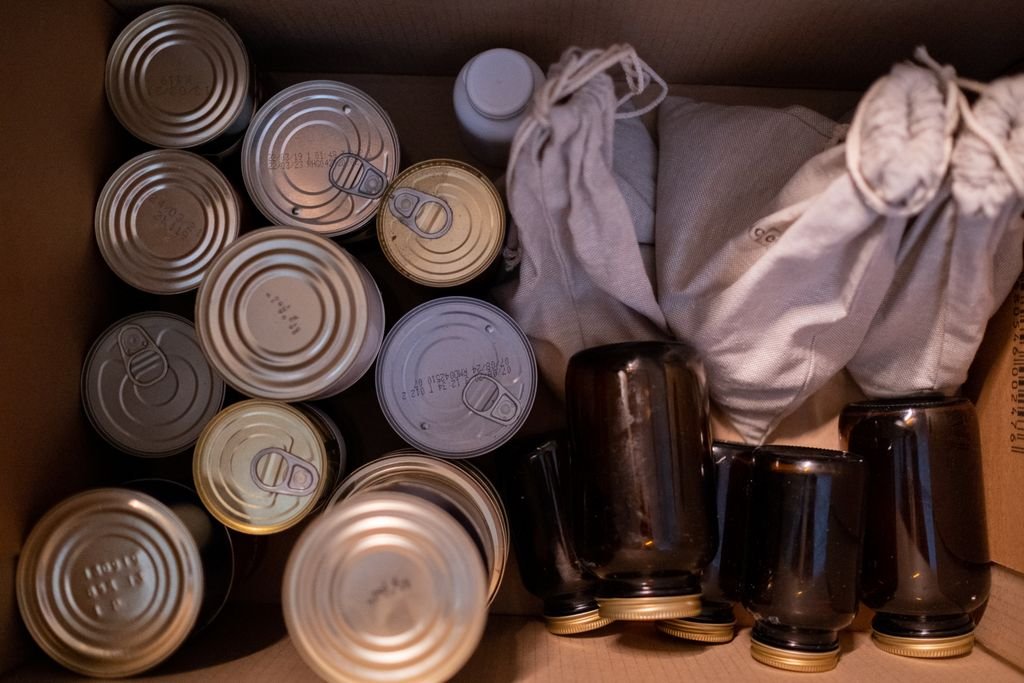
The official emergency guidance recommends food with a long shelf life that does not require cooking or refrigeration. Examples include tinned meat, fish or vegetables, along with dried fruit and nuts. It advises households to choose food they ordinarily eat.
This is an important distinction.
Not all tinned food is ultra processed.
Not all shelf stable food is unhealthy.
Tinned vegetables, beans, pulses and fish can be practical foods with relatively simple ingredients. Dried fruit, nuts, oats and other basic products may also store well without being ultra processed.
We should not undermine the credibility of the series by grouping every packaged or preserved food into the same category.
But neither should we ignore the wider reality.
Many of the products most aggressively marketed around convenience, long shelf life and instant consumption are industrial formulations rather than simple preserved foods.
According to the British Heart Foundation’s explanation of the NOVA classification, ultra-processed foods commonly contain ingredients or additives rarely used in home cooking and can include products such as mass produced breads, some breakfast cereals, instant soups, sausages, crisps, biscuits and carbonated drinks. The same source distinguishes these products from processed foods such as tinned fruit or vegetables, homemade bread and cheese.
Preparedness guidance does not explicitly tell people to consume ultra processed food.
However, when people are told to buy long life, ready to eat products, the products most visible, widely marketed and convenient may often include ultra processed options.
That makes the surrounding food environment relevant.
Survival food and nourishing food are not interchangeable
In a genuine emergency, the immediate priority is having safe food available.
A short period relying upon tins, packets or other shelf stable products is not the same as an everyday dietary pattern.
But the campaign still raises a deeper question –
Why is our idea of food resilience centred upon products stored in cupboards rather than the capacity to produce, distribute and prepare nourishing food?
A genuinely resilient food system would not begin and end at the supermarket shelf.
It would include
• secure domestic food production
• viable farms and food producers
• suitable land
• healthy soil
• diverse crops and livestock
• regional processing and storage
• shorter supply chains where practical
• independent retailers
• affordable access to basic ingredients
• and the household skills needed to prepare them
Fresh and minimally processed food requires physical resources.
It requires time to grow, rear, harvest, transport, store and prepare.
It requires knowledge and skill.
It may have a shorter shelf life.
It does not always fit neatly into a system designed around speed, scale and predictable margins.
Ultra processed products can be easier to standardise, manufacture, advertise, transport and store.
That makes them commercially attractive.
It does not automatically make every such product harmful, but it does mean that commercial efficiency can shape what becomes most available and normalised.
The health concern is real, even where the evidence continues to develop
The UK’s Scientific Advisory Committee on Nutrition rapid evidence update concluded that the association between higher consumption of ultra processed foods and adverse health outcomes is concerning.
It also explained that limitations in the available evidence make it unclear whether the associations arise from processing itself or because many of these foods are high in calories, saturated fat, salt or free sugars.
That is not a reason to dismiss the concern.
It is a reason to describe it accurately.
The evidence does not justify saying that every ultra processed product causes illness or that all shelf stable food is harmful.
It does justify asking why so much of the modern food environment is built around industrial formulations, intense convenience and products that may displace more nutritious foods.
A credible consumer campaign does not need to overstate the science to make a powerful point.
The concern is not merely what happens during three emergency days.
It is what the recommendations reveal about the everyday food system surrounding us.
For many households, packaged convenience is not an occasional choice.
It is what time, price, advertising, availability and working patterns make easiest.
When emergency preparation relies on the same model, it reinforces rather than challenges that dependence.
Food resilience should mean more than keeping enough calories in a cupboard.
It should mean preserving our capacity to produce, obtain and prepare food that supports health.
Preparedness Has A Cost
& Not Every Household Can Absorb It

The official campaign advises households to build their supplies gradually and acknowledges that not everyone will be able to take every suggested action.
It also encourages neighbours and communities to consider how they could support others.
That acknowledgement is welcome.
But it also exposes another uncomfortable truth.
Preparedness requires disposable income.
It requires storage space.
It requires the ability to purchase items before they are needed and leave them unused.
It requires someone to check dates, replace products and adapt the supplies when household needs change.
A financially secure household with spare cupboards, a garage and reliable transport will find this easier than someone living in a small rented flat, managing debt or struggling to cover the current week’s food and energy.
The people most vulnerable during disruption may also be those least able to finance their own protection from it.
Three days of water for several people occupies considerable space.
Extra food costs money.
Power banks, radios, torches, batteries and first-aid products cost money.
Keeping cash at home means withdrawing money from a budget that may already have no margin.
That does not mean the advice should be abandoned.
It means preparedness cannot be treated as equally accessible to everyone.
If national resilience relies upon household readiness, then support for readiness must recognise inequality in
• income
• housing
• disability
• health
• mobility
• digital access
• transport
• and available storage
Otherwise, resilience risks becoming another product purchased by those who can afford it, while those most likely to need help are told they should have prepared better.
From Shared Protection
to Transferred Responsibility
This is where the apparently separate issues begin to connect.
When payment systems may be unavailable, the household is told to store cash.
When the water supply may be interrupted, the household is told to store bottles.
When electricity or refrigeration may fail, the household is told to store food that requires neither.
When communication networks may be disrupted, the household is told to keep a radio, a written contact list and a charged power bank.
Every recommendation may be reasonable when viewed individually.
Together, however, they reveal a larger shift.
The consumer pays for access to the system in ordinary life and is then expected to finance a parallel survival arrangement for the periods when that system fails.
The household is required to create its own redundancy.
Yet the household does not control
• payment infrastructure
• banking continuity
• telecommunications
• water company investment
• sewage infrastructure
• energy networks
• food production
• national supply chains
• or emergency service capacity
This creates a fundamental imbalance
Responsibility is being pushed downwards while control remains concentrated above.
That is the real subject of The Resilience Paradox.
It is not about refusing personal responsibility.
It is about refusing to let personal responsibility become an excuse for weak infrastructure, excessive centralisation or inadequate accountability.
What Live Beyond the Label Believes True Resilience Should Look Like
True resilience must exist at more than one level.
At household level
People should be given practical, affordable and realistic information about emergency preparation.
Guidance should account for the needs of different households rather than assuming everyone has the same money, health, mobility or storage space.
People should be encouraged to retain useful skills, including cooking from basic ingredients, managing food safely and understanding local sources of support.
At community level
Resilience should include local networks rather than treating each household as an isolated unit.
Independent shops, local producers, community groups, neighbours and regional supply chains can all contribute to the capacity to respond when national systems are disrupted.
At institutional level
Banks and payment providers should be accountable for operational resilience.
Access to cash and the ability to spend it should remain protected.
Water companies should maintain and invest in the infrastructure for which they are responsible.
Food policy should support domestic production, diverse suppliers, nutritional quality and household food skills, not only large-scale convenience.
Regulators should be properly empowered to investigate failures and impose meaningful consequences.
At government level
Government should not limit the resilience conversation to what people keep in their cupboards.
It should explain –
• what is being done to prevent failures
• what standards institutions must meet
• how risks are being reduced
• who is accountable when systems fail
• what support will reach those unable to prepare independently
• and how essential alternatives will be maintained
Preparedness should be reciprocal.
If the public must be ready, then the systems serving the public must be ready too.
The Questions The Headline Does Not Answer

The Be Ready campaign tells consumers what to store.
It does not, within its household checklist, answer every wider question raised by that advice.
So we will ask them.
On money
If cash remains essential when digital systems fail, why is its acceptance becoming less dependable during normal life?
What protection exists for people who cannot use digital banking easily?
What happens if someone has money in an account but the infrastructure needed to access it is unavailable?
Who benefits from the continued movement towards digital-only transactions and who carries the cost?
On water
Why should the resilience conversation begin inside the consumer’s cupboard rather than with the infrastructure delivering the water?
How much responsibility should sit with households and how much with water companies and regulators?
Are penalties sufficient to change behaviour and ensure investment?
How can preparedness avoid creating additional reliance upon single use packaging?
On food
Why is emergency food planning centred on shelf life and convenience rather than wider food resilience?
How can households distinguish between simple preserved foods and heavily formulated ultra processed products?
Why have food growing, cooking and preservation skills become less visible in modern resilience planning?
Can a food system truly be called resilient if it is efficient at distributing packaged products but fragile when energy, transport or technology is interrupted?
On responsibility
Are consumers being asked to prepare for unavoidable emergencies or to compensate for risks that could have been reduced through better investment and governance?
When a system fails, who pays?
Who is held accountable?
And why does the burden so often arrive at the household door?
Our Position
Live Beyond the Label supports sensible household preparation.
But we reject the idea that resilience can be transferred almost entirely onto consumers.
We reject a version of resilience that asks people to stockpile bottled water without demanding resilient water infrastructure.
We reject a version that tells people to retain cash while allowing the places where cash can be obtained, deposited or spent to diminish.
We reject a version that reduces food security to a cupboard of long life products while domestic production, local supply chains and practical food skills receive insufficient attention.
We reject the normalisation of systems that maximise convenience when they work but leave individuals carrying the consequences when they do not.
Consumers should not have responsibility without a voice.
They should not have risk without control.
They should not be expected to prepare privately for every weakness created by decisions made elsewhere.
Being ready matters.
But household readiness must sit alongside
• robust infrastructure
• corporate accountability
• meaningful regulation
• transparent decision-making
• maintained alternatives
• consumer choice
• and a national commitment to preventing avoidable failures
Because true resilience is not measured only by what we can survive when systems fail.
It is measured by whether those systems were built responsibly enough to deserve our dependence in the first place.
What can consumers do now?
Challenging the wider system does not prevent us from taking sensible action today.
Prepare thoughtfully
Build an emergency supply around the actual needs of your household rather than panic buying or copying a generic shopping list.
Choose food carefully
Shelf stable does not automatically mean ultra processed. Look for useful basics such as beans, pulses, vegetables, fish, nuts, seeds, oats and dried fruit, depending on your household’s dietary and medical requirements.
Retain some cash if you can
A modest mixture of notes and coins may provide an alternative during a payment outage. Emergency cash should be stored securely and within what your household can realistically afford.
Maintain practical skills
Cooking from basic ingredients, rotating stored food, understanding food dates and knowing how to manage during a short power or water interruption all strengthen household resilience.
Know your local support
Identify neighbours, local shops, community organisations and official services that could form part of a response during disruption.
Keep asking who is accountable
Personal preparation and public accountability are not opposites.
We can prepare our households while demanding better from the institutions upon which those households depend.
Coming next – Part Two
The Cashless Contradiction
In the next episode of The Resilience Paradox,
we will examine the movement towards digital payments and what it means for
• access to money during disruption
• the survival of cash as a usable alternative
• transaction costs for small businesses
• financial inclusion
• consumer autonomy
• and the resilience of local communities.
Because the Government’s recommendation to keep emergency cash leaves us with a question that cannot be ignored –
If cash remains important when technology fails, why are we allowing it to become less usable when technology works?